|
| Salman Khurshid |
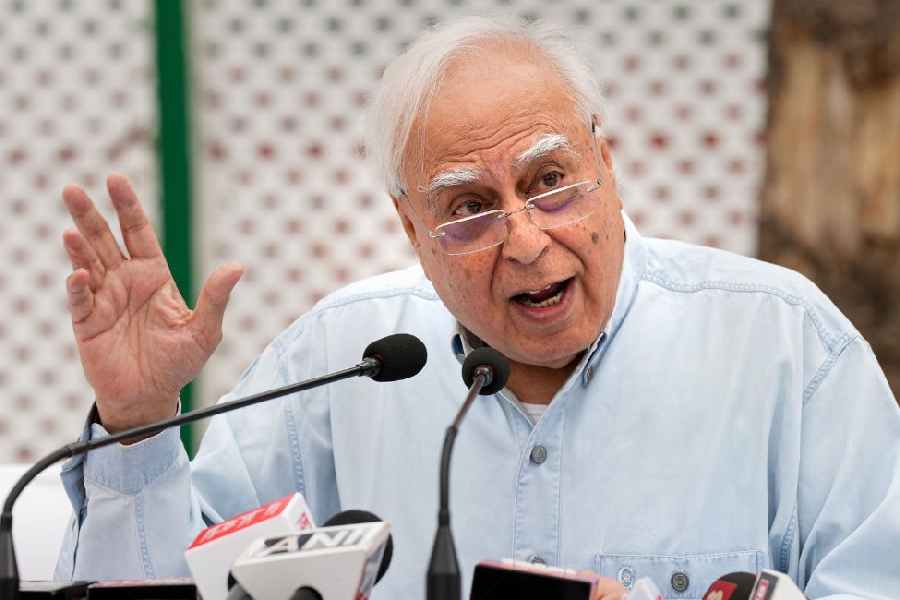
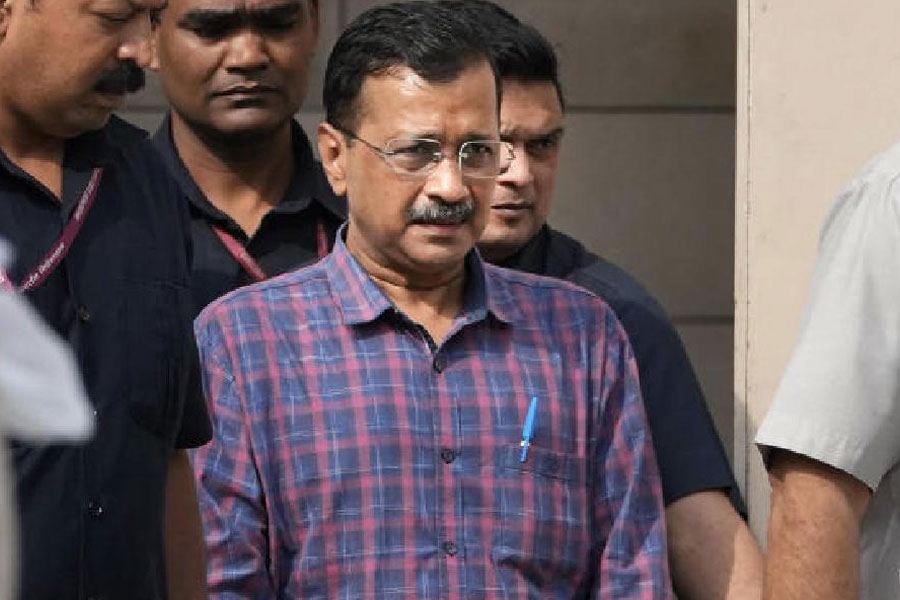
Remarkably, for a conversation so evocative and eclectic, law and minorities affairs minister Salman Khurshid has no recollection of his freewheeling chat with Tiger Pataudi in 1995 —- It must have taken place because you printed it but I just have no memory of it, absolutely not, Khurshid told The Telegraph at his residence this evening.
Asked to ponder why, he put it down to the assault of Indian politics that drags you away from finer and elevated thought and confines you to concerns of immediate conflict and confrontation. Reminded about extracts from that conversation, he said: Its a sad but nostalgic rediscovery of the age of innocence.
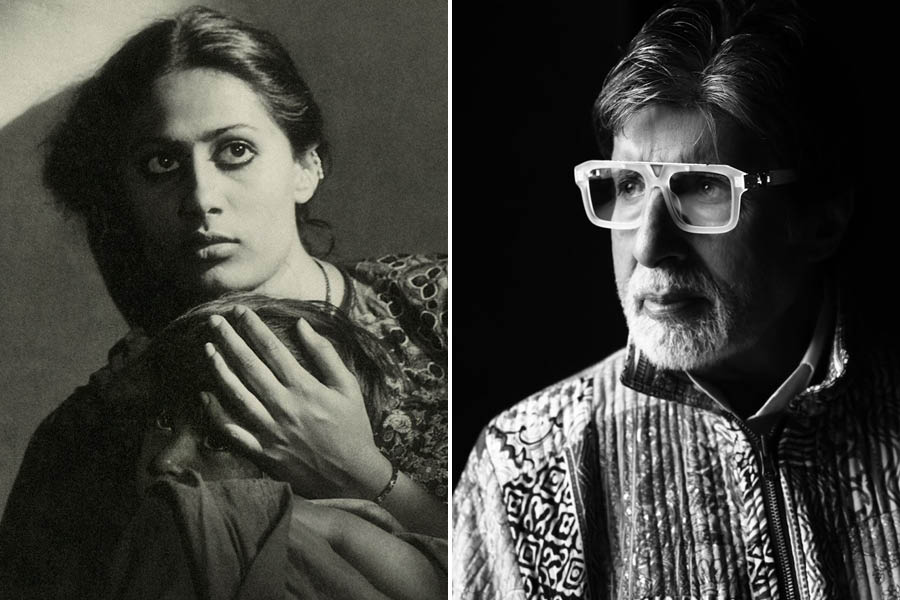
An old friend of Tigers who preferred to keep the relationship private down the years, Khurshid was barely able to contain the pain of his passing in his eyes. This is what he had to say as tribute of memory: My engagement and relationship with Tiger Pataudi continued to grow over the years. He was an important and valued guest at every gathering of my closest and cherished friends from different walks of life. The first time I saw him was as a schoolboy accompanying my grandfather (the late Dr Zakir Hussain) who would have been Vice-President then. It was a trip to a beautiful, fairy-like mansion lit up with bright lights in the rural darkness of Pataudi. I remember Tiger Pataudi dressed in a finely embroidered achkan. That was the night Sharmila Tagore alias Ayesha became his bride.
I visited Pataudi again for a special occasion that involved Quran Khani (a benediction ceremony) and a splendid feast to mark a very special moment in the life of his son, then a budding actor and now the superstar, Saif Ali Khan. In between those visits and after, we spent many evenings at Tigers erstwhile home in Dupleix Lane and at our place in Jamia Milia, when he regaled us with stories of cricket and shikar (hunting) and his somewhat mildly cynical attitude to politics. I didnt think that he would be 70 so soon, and I did not at all expect that he would walk away from the crease so early. But on reflection it becomes apparent that we have already seen a lifetime go by in which a remarkable athlete succumbed to an unlikely ailment. But he has left us with a lasting image of perennial youth. I doubt if any one of us can reach the score that he made to become one of the immortals of our times. I am really, really, lucky to have known a friend like Tiger Pataudi.
Excerpts from the interview published in September 1995:
|
| Pataudi with Sharmila |
Salman Khurshid: Why are you not where I am? Why are you not in politics?
Tiger Pataudi: I did try it, Salman, if you remember, and I think that the reason Im not there is because the other fellow got more votes than I did, and the person who got me interested in active politics is no longer there. One of the main reasons why I did enter politics was because of Rajiv Gandhi and I felt that with him not there, it just didnt seem like the same thing. And the other thing I think is, I didnt go into this game, if I can call it that, at a very young age, lets say student days. To enter politics in India, the way it is played, after the age of 50, without having any specific background in politics means a tremendous change in your lifestyle and I wasnt too sure that I was fit to make that change so late in life. If I started, say, 20 or 25 years earlier, I might have stuck it out. But to stick it out from the beginning, so to speak, after a start at the age of 55, I thought was a bit too rough. I couldnt do it.
Salman: What do you really mean by a totally different way of living?
Tiger: I mean you lose your privacy entirely to begin with. You can forget your family life, something which I find very important. I like my privacy. So, Im just not cut out to be a public figure as such.
Im too set in my ways to change into something else now. That is the most honest answer I can give you.
Salman: Tell me about other things in life… something about the media world.
Tiger: Really, they deserve the biggest kick up their arse. They do the most damage.
Salman: And they are absolutely irresponsible. Dont you see something in this, apart from the fact that there is a big problem of accountability in the media and every time weve tried, or anyone has tried, to make a system by which the media can be made accountable, theyve cried, theyve cried themselves hoarse, and we havent succeeded. People can defame anyone they like, people can write anything they like. But non-accountability is a part of modern Indian culture.
Tiger: But theyre also well patronised. They wouldnt be doing this unless they were patronised by the politicians.
Salman: Yes that is true. But the media is going to change. There is a new kind of media. I often tell the small-time newspaper people that you keep publishing your 5,000 copies defaming people, but theres an electronic media coming that sees facts a little more clearly because it shows them on the screen. You object as much as you like, but the day of the electronic media has come.
What do you see in all this talk about we are going to be inundated with an alien culture, our own culture is going to die, our children are going to be speaking like Americans, etc, etc? How do you see that?
Tiger: I recollect the remark a young lady made about renaming Connaught Place as Rajiv Chowk. But she said it sounds a bit local. Thats her objection — that it sounds local. That should answer your question.
Salman: That should go down well in Calcutta. But, what are your views on pornography, what are your views on greater transparency, access to films, access to all kinds of literature?
Tiger: I think theres not much choice, really. The more you try to keep it bottled up, I think the more damage its going to do. When you talk about pornography, I would certainly not recommend it for children. But I think that the amount of damage pornography does is so exaggerated.
Salman: And the things that you like to read, which doesnt mean pornography, but literature that youre fond of… what kind of literature do you read?
Tiger: Im less fond of reading than I am of listening to music. Im very fond of music. Mostly, Indian classical which I listen to a lot. Both vocal and instrumental. Vocal, I tend to be interested in the lighter stuff — thumris, ghazals. Heavier stuff on instruments.
Salman: Apart from music, you have a cricketing world. Did cricket come naturally?
Tiger: Yes, absolutely. And it has to. If it hasnt come to you by the time you are seven or eight, it wont no matter how many hours you practise.
Salman: After all these years, what do you think of the way cricket is played today?
Tiger: My first objection to todays cricket is that I wouldnt like it — for the simple reason that it needs so much travelling. Pack your bags, get into a plane, come out of the plane, pack your bags again, its become like a tennis circuit. I mean, I couldnt have taken that. Obviously, these guys can, because theyve been brought up to it.
Salman: You became captain at 19.
Tiger: 21.
Salman: Now I know you had established your reputation at Oxford, but 21 is very young. Was that something you were conscious of or something that people around you were conscious of?
Tiger: I was the youngest member of the team. All the players were retiring… Polly and so on… there wasnt too much of a hassle, they were ready to help. It was the middle group, out of which, I dont want to mention names, who aspired to the captaincy. They werent very happy. A great thing about cricket is that, you know, if you score a hundred for yourself…
Salman: What Im interested in is the fascinating image of young leaders… you know, young people leading in different fields. You see athletes and people in gymnastics, where the requirement is that you are supple and very, very young… 11… and by the time youre 14, youre already over the hill.
Generally, it is human endeavour to have young people lead, and you see that in public life in the US and everywhere. I was telling our Prime Minister one day that all around us there are chief executives who are in their early 40s, mid-40s… But here, in our country, there just isnt the acceptance of young people as leaders despite the fact that in different fields, theyve all done so well. If you could be a leader at 21 in cricket without anyone questioning it, or today Tendulkar playing as a veteran not yet 24, why suddenly when you take the leap into politics at the age of 50, youre saying that you had come in too late, but theyre saying youre too young, you cant be taken seriously?
Tiger: Till youre 70. It doesnt only apply to politics, surely, its very much in the family system also to the extent that it still exists. Especially in the villages, youre a bachchaa till youre 50, till you get on the council of villagers. On the other hand, youre retiring people too young also. At the age of 58, a guy has no business to retire.
Salman: Okay, lets switch tracks a little bit, who are the people who have made the most lasting impression on you… not necessarily in cricket, but in terms of your family, your extended family, in terms of political leaders?
Tiger: Nehru made a remarkable impression and I just cant forget him, for various reasons, one cannot forget the times. The times had a certain flavour, it was easy and more laid back. No doubt, J.R.D. impressed me immensely when I had spoken to him. Humble and no fuss. Im really impressed by the dedication of a lot of musicians. I have been fortunate I think to have lived in a society that saw and heard the best. Unfortunately, over the years one has become a little cynical and when one looks at things at 1995, the values seemed to have changed so much that one almost feels left out of things. Because he cant beat the system otherwise. This has made me a little sad. |