UAE may join US-led miltary initiative to secure Strait of Hormuz from Iran's attacks
The United Arab Emirates could take part in a U.S.-led effort to safeguard shipping through the Strait of Hormuz, a senior Emirati official said on Tuesday, though he also said that no formal plan had been agreed and discussions were ongoing.
"We all have a responsibility to ensure the flow of trade, the flow of energy," Anwar Gargash, the diplomatic adviser to the country's president, said at an online event hosted by the American think tank the Council on Foreign Relations.
Gargash also said that once the U.S.-Israeli war with Iran ends, an arrangement would be needed to ensure that Iran cannot use its nuclear, missile or drone programs "to terrorize the region."
Concerns have mounted over the security of shipping through the Strait of Hormuz, which Iran has effectively blocked, and as President Donald Trump has sought to rally countries to deploy warships to escort tankers through the strategic waterway.
US pushes Syria for action against Hezbollah in Lebanon amid Iran war, but Damascus wary
The United States has encouraged Syria to consider sending forces into eastern Lebanon to help disarm Hezbollah, but Damascus is reluctant to embark on such a mission for fear of being sucked into the war in the Middle East and inflaming sectarian tensions, five people briefed on the matter said.
The proposal to Syria's U.S.-allied government reflects intensifying moves to disarm Iran-backed Hezbollah, which opened fire at Israel in support of Tehran on March 2, prompting an Israeli offensive in Lebanon.
The idea was first discussed by U.S. and Syrian officials last year, said two of the sources - both Syrian officials - and two others familiar with the discussions. All spoke on condition of anonymity because of the sensitivity of the matter.
The idea was raised again by U.S. officials around the time the U.S. and Israel began their war against Iran. The two Syrian officials said a U.S. request came shortly before the war began. A Western intelligence source said it was just after it started.
Reuters spoke to 10 sources for this article - six Syrian officials and government advisors, two Western diplomats, a European official and a Western intelligence source. All said Syria's Sunni Islamist-led government had been cautiously considering a cross-border operation but remained hesitant.
U.S. encouragement for a Syrian operation in eastern Lebanon and Syria's hesitation to carry one out have not previously been reported.
A U.S. State Department spokesperson declined comment on "private diplomatic communications", and referred Reuters to the Syrian and Lebanese governments for comments on their operations.
Despite historic enmity towards Hezbollah and Tehran - both fought alongside Bashar al-Assad during Syria's 2011-24 civil war - Syrian President Ahmed al-Sharaa has moved cautiously since U.S.-Israeli airstrikes on Iran began on February 28.
One source, a senior Syrian official, said Damascus and its Arab allies agreed Syria should stay out of the war, and take only defensive measures.
Damascus has deployed rocket units and thousands of troops at the Lebanese frontier since early February, calling these measures defensive.
Syria's ministries of foreign affairs and information did not respond to requests for comment.
Responding to questions from Reuters, Lebanon's presidency said it had not received any "hint or notice from the U.S., the West, the Arab countries or Syria" about U.S.-Syria discussions on a potential cross-border operation.
Lebanese President Joseph Aoun had held a bilateral call with Sharaa, and a trilateral call also involving France's president, in which Sharaa said Syria respected Lebanon's sovereignty and had no intervention plans, the presidency said.
It said Lebanon coordinates with Syria on border arrangements but has never discussed Hezbollah with Damascus.
Lebanon's military said channels of coordination with Syria remained open "within the framework of addressing border issues and common security challenges", with the aim of preventing tensions or incidents and ensuring stability in the border area.
Prime Minister Nawaf Salam said Sharaa had told him "the reinforcement of the military presence along the Syrian-Lebanese border aims solely to strengthen border control and maintain internal Syrian security", and that Sharaa underlined the importance of continued coordination.
Aoun has pursued a policy aimed at securing Hezbollah's disarmament but Beirut has moved cautiously, with Hezbollah wielding a potent arsenal and enjoying significant support among Lebanese Shi'ite Muslims.
Sharaa has said he supports Aoun's efforts to disarm Hezbollah.
The senior Syrian official said Washington had given the green light for an operation into eastern Lebanon to help Lebanon disarm Hezbollah - when the time is right.
But Damascus saw risks including possible Iranian missile attacks and potential for unrest among minority Shi'ites, threatening efforts to stabilise Syria after sectarianviolence last year.
Two Western diplomats also said Washington had approved the idea of a Syrian cross-border operation against Hezbollah. The Western intelligence source and a European official said the U.S. had asked Syria's army to play a more active role countering Hezbollah in Lebanon, including via a possible incursion into the east.
The Western intelligence source and the European official said Syria's leadership was wary of entering Lebanon as this could inflame bilateral tensions.
A Syrian military official said there was no final decision yet on any possible operation inside Lebanon, but the option of intervening in the event of a conflict between the Lebanese state and Hezbollah remained on the table.
Syria long dominated Lebanon under the Assads, sending in forces in 1976 during the 1975-90 civil war at the invitation of President Suleiman Frangieh and controlling Lebanon's post-war politics until its withdrawal in 2005.
Any Syrian intervention could fuel sectarian tensions in both Syria and Lebanon, home to a mosaic of sects including Sunnis, Christians, Druze and Shi'ites.
In a March 13 interview with Lebanese broadcaster MTV, Syrian Defense Ministry spokesperson Brigadier General Hassan Abdel Ghani said the build-up at the border was a defensive measure. There was a high level of coordination with Lebanon's army, he said, and Sharaa supported the establishment of Lebanese state authority over Lebanon.
Last week, Syria's army said Hezbollah artillery shells landed in a border village. Hezbollah had said it had repelled an Israeli attempt to infiltrate Lebanon from the same village. Israeli officials said they were unaware of any such operation. The Syrian army said it was "considering appropriate options to take the necessary actions" in response.
Eliminated gangsters who were terrorising Iranians: Netanyahu confirms killing of Ali Larijani
Claiming to have eliminated Iran's top security official Ali Larijani, Israeli Prime Minister Benjamin Netanyahu on Tuesday said that the joint US-Israeli strikes were aimed at weakening the Iranian government to give the Iranian people the chance to take their "destiny into their own hands".
"This morning, we eliminated Ali Larijani...Alongside him, we also eliminated the commander of the Basij – they are the gangsters' assistants who are terrorising the population in the streets of Tehran and other Iranian cities," he said in a statement.
Larijani had effectively evolved as the in-charge of Iran's war management following the assassination of Supreme Leader Ayatollah Ali Khamenei by Israel on February 28 in the opening strike of the war, which is now in its eighteenth day.
There was no word from the Iranian government on the fate of Larijani, the Secretary of the country's Supreme National Security Council.
"We are undermining this regime in the hope of giving the Iranian people an opportunity to remove it. It will not happen all at once, and it will not happen easily," the Israeli premier said.
"But if we persist, we will give them the chance to take their destiny into their own hands," he added.
The Israeli leader has been constantly claiming that his country, along with the US, can enable the creation of a conducive situation for the overthrow of the Iranian regime, but the people of Iran will ultimately have to execute it.
He said that his country continues to operate in different parts of Iran from the air with Air Force jets and UAVs.
Repeating his earlier statement from a press conference last week, Netanyahu said Israel has several surprises in store and he is holding the stratagems close to his chest.
"We are helping our American friends in the Gulf. I spoke at length with President Trump on this matter yesterday. There is cooperation between our air forces and navies, between myself and President Trump and his staff. We will assist both through indirect attacks, which create immense pressure on the Iranian regime, and through direct actions," he said.
"There are many more surprises. 'By stratagems, you shall make war.' We will not reveal all the stratagems here, but as I told you, there are many," he asserted.
He also urged his forces, leaders and people to stay steadfast in their resolve to win.
"The most important thing for winning a war is determination: Determination, determination, determination. The determination of the leaders, the determination of the commanders, and the determination of the people. We are determined to win, and we will achieve these goals," Netanyahu said.
Asserting that Israel has emerged as a formidable power after the shock of October 7, Netanyahu, who has constantly come under attack from his people and opposition demanding a state commission of enquiry, said that Israel has emerged stronger than ever.
"I ask you to simply ignore the 'channels of gloom.' We are achieving historical milestones...We have reached a point where, after October 7, when we were on the brink of an abyss, we are now a formidable power, almost a global one, fighting shoulder-to-shoulder with our friend, the global superpower," he said, touting the strong alliance with the US.
The Premier also tried to assure the population that has come under attack and suffered losses, with thousands of insurance claims piling up, that they will receive the state's help in coping with it.
NATO countries don't want to get involved in Iran operation: Trump
President Donald Trump said on Tuesday that the U.S. had been informed by most of its NATO allies that they did not want to get involved with the country's military operation in Iran.
"Because of the fact that we have had such Military Success, we no longer 'need,' or desire, the NATO Countries’ assistance — WE NEVER DID!" Trump wrote in a post on Truth Social, also singling out Japan, Australia and South Korea.
Fire aboard USS Gerald R Ford burns over 30 hours, 600 affected: Report
A fire aboard the US aircraft carrier USS Gerald R. Ford burned for more than 30 hours last week, according to sailors and US officials, in the latest setback during the vessel’s prolonged deployment tied to President Donald Trump’s military operations.
According to an NYT report, the blaze, which began in the ship’s main laundry area on Thursday, left more than 600 sailors without berths, forcing many to sleep on floors and tables, officials said.
The carrier, carrying about 4,500 personnel, had been operating in the Mediterranean in October when Defense Secretary Pete Hegseth ordered it to redeploy to the Caribbean as part of Washington’s pressure campaign against Venezuela’s Nicolás Maduro. It was later sent to the Middle East for the ongoing US-Israeli war with Iran.
US Central Command said two sailors were treated for non-life-threatening injuries, though crew members reported that dozens experienced smoke inhalation.
45 million people will face acute hunger by June as Iran war continues: World Food Programme
Tens of millions more people will face acute hunger if the Iran war continues through to June, according to analysis from the World Food Programme released on Tuesday. The U.S.-Israeli attacks on Iran that began on February 26 have choked up key humanitarian aid routes, delaying life-saving shipments to some of the world's worst crises.
An extra 45 million are projected to be pushed into acute hunger because of rises in food, oil and shipping costs, pushing the global tally above its current record level of 319 million, Deputy Executive Director of the World Food Programme Carl Skau told reporters in Geneva.
"This would take global hunger levels to an all-time record and it's a terrible, terrible prospect," he said. "Already, before this war, we were in a perfect storm where hunger has never been as severe as now, in terms of numbers and how deep that hunger is," he added.
Skau said its shipping costs are up 18% since the U.S.-Israeli attacks on Iran began on February 28 and that some have had to be rerouted. The extra costs come on top of deep spending cuts by the WFP, as donors focus more on defence, he added.
Israel violates Gaza ceasefire: Child amond three killed in Khan Younis airstrike
An Israeli airstrike killed at least three people including a child in the Gaza Strip on Tuesday, local health authorities said, the latest violence jeopardising the ceasefire which has been under strain during the Israeli-U.S. war against Iran.
Medics said the airstrike targeted a vehicle in the western area of Khan Younis, south of the enclave, killing three people, including a child, and wounding 12 other people. There was no immediate Israeli comment.
Israel's military has continued to strike Gaza during the regional war with Iran and Hezbollah in Lebanon. On Sunday it killed 12 people in Gaza, including nine police officers in one strike that Israel said targeted a Hamas cell. The military has cited threats or fire from Hamas as the reason for its attacks.
Israel's assault has since killed more than 72,000 Palestinians, Gaza's health authorities say, including more than 670 since a ceasefire was reached last October. Gaza health officials said at least 40 people have been killed by Israeli fire since the United States and Israel launched joint attacks on Iran at the end of February.
Three sources told Reuters on Monday that envoys from U.S. President Donald Trump’s “Board of Peace” have met representatives of Hamas in Cairo in an effort to safeguard the October Gaza ceasefire, which has come under serious strain.
A Palestinian official with knowledge of the Cairo talks said that Hamas believed Israel was exploiting the war on Iran to slip away from its obligations under Trump's plan. Israel rejects this.
Israel and Hamas have traded blame for ceasefire violations.
Separately, Israeli forces shot and killed a 17-year-old Palestinian and wounded another in the Israeli-occupied West Bank, health officials said on Tuesday.
The Israeli military said forces fired at three people who hurled stones at Israeli vehicles near the town of Salfit, “neutralising” two of them.
Rights groups and medics say Israeli settlers are taking advantage of curbs on movement imposed during the U.S.-Israeli war on Iran to attack Palestinians in the West Bank, with military roadblocks preventing ambulances from reaching victims quickly.
Settlers have killed at least five Palestinians in the West Bank since the Iran war began on February 28, according to the Palestinian health ministry.
Iran detains 10 foreigners among dozens in massive wartime crackdown
Iran arrested 10 foreigners among dozens rounded up on suspicion of collaborating with Israel and the U.S., Iranian media said on Tuesday, as officials warned people to stay at home during a festival that they said could be exploited by "the enemy".
Iran's police chief Ahmadreza Radan said on Sunday that at least 500 people had been arrested since the start of the war pitting Tehran against Israel and Washington, accusing the detainees of sharing information with adversaries.
In addition to the 10 foreign individuals arrested in the northeastern Khorasan Razavi province, 55 people were detained in the southern Hormozgan province, the semi-official Tasnim news agency reported on Tuesday.
The group of foreign individuals, whose nationality was not given in media reports, are accused of collecting information on sensitive sites and preparing field operations. The larger group arrested in southern Iran were presented as "mercenaries" of the U.S. and Israel.
The ministry of intelligence told state media on Tuesday that hundreds of Starlink systems, which some Iranians use to bypass an internet shutdown, were seized in a nationwide operation and reminded people that owning such technology could be subject to the highest punishments.
Meanwhile, the police chief also warned of the possibility that a popular festival held on Tuesday evening may see adversaries "create insecurity in the country".
In January, the country saw nationwide anti-government protests, which were quashed in the biggest crackdown in the Islamic Republic's history.
Chaharshanbe Suri (Scarlet Wednesday), an ancient Zoroastrian feast, is held on the eve of the last Wednesday of the Iranian calendar, with Iranians usually setting off fireworks and jumping over fires at their home courtyard or in the streets.
“The enemy may seek to cause accidents and even casualties with such actions in order to inflame the atmosphere in the country,” Radan said, according to state media.
A spokesperson for Tehran's firefighters also called upon people not to go outside for the festival, and instead celebrate at home.
Oil tankers 'dribble through' Strait of Hormuz: White House downplays Iran war impact on US economy
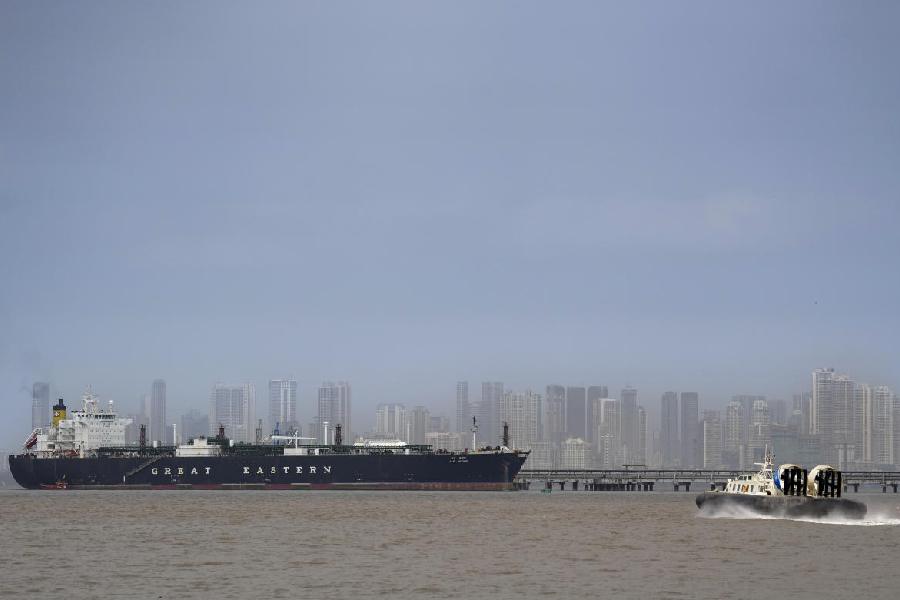
Oil tankers are crossing the Strait of Hormuz and Iran's actions to choke traffic through the shipping route have not hurt the U.S. economy, White House economic adviser Kevin Hassett told CNBC on Tuesday, reiterating the Trump administration's position that the war should be over in weeks, not months.
"Already you're seeing tankers are starting to dribble through the straits, and I think it's a sign of how little Iran has left," he said.
"We're very optimistic that this is going to be over in the short run, and then there will be price repercussions when it is over for a few weeks, as the ships make it to the refineries."
Hassett said there is concern that Asia may not be exporting as much refined oil to the U.S. to handle a decrease in supply from the Middle East.
"We're seeing some signs that they might be pulling that back to make sure that they have enough energy for themselves. And we've got a plan for that," he said.
Trump on Monday postponed his meeting with Chinese President Xi Jinping to focus on the war in Iran.
Hassett said the U.S. action in Iran is in China's interest.
"This is one case where the objectives of both countries are aligned, that we want, you know, a stable world oil market," he said. "When this war is over, which will be sometime soon, I'm sure they'll get together and have a lot to talk about, and hopefully when the Chinese will express some gratitude."
IDF confirms assassination of Iran’s top Security chief Ali Larijani in Tehran
The Israel Defence Forces (IDF) announced the "elimination" of Ali Larijani, the Secretary of Iran’s Supreme National Security Council (SNSC).
Larijani was described by the IDF as the regime’s "effective leader" following the recent death of former Supreme Leader Ali Khamenei. Besides being a close friend of the erstwhile supreme leader, Larijani personally oversaw the "massacre" of Iranian protesters during the recent wave of domestic unrest, IDF claimed.
— Israel Defense Forces (@IDF) March 17, 2026
Ali Larijani, Secretary of Iran’s Supreme National Security Council and the regime’s effective leader, has been eliminated.
Throughout the years, Larijani was considered one of the most veteran and senior figures within the Iranian regime leadership, and was a close associate… pic.twitter.com/kBIgSSGBm0
Iran's ambassador to Russia denies reports of Mojtaba Khamenei’s hospitalization in Moscow
Iran's ambassador to Russia, Kazem Jalali, has denied a media report that the country's new Supreme Leader Ayatollah Mojtaba Khamenei is receiving medical treatment in Moscow, the state TASS news agency reported on Tuesday.
Kuwaiti newspaper Al-Jarida reported over the weekend that the 56-year-old, who was reported to have been severely injured in a U.S.-Israeli airstrike that killed his father, had been moved to Moscow for medical treatment following President Vladimir Putin's personal invitation.
The Kremlin declined to comment on the original media report.
India denies discussing release of vessels with Iran for Hormuz passage
India has had no discussions with Iran over the exchange of three vessels, a spokesperson for India's foreign ministry said on Tuesday.
Reuters reported on Monday, citing sources, that Iran had asked for the return of three seized tankers in exchange for India asking for India-flagged or India-bound vessels' safe passage through the Strait of Hormuz, a key artery for global crude trade.
Iran's new supreme leader rejects proposals for reducing tensions with US
Iran's Supreme Leader Ayatollah Mojtaba Khamenei has rejected proposals for reducing tensions or for a ceasefire with the United States that were conveyed to Tehran by two intermediary countries, a senior Iranian official said on Tuesday.
Khamenei's stance for revenge against the U.S. and Israel was “very tough and serious” in his first foreign policy session, the official said, without clarifying whether the leader attended the session in person. The U.S.-Israeli war on Iran is in its third week with at least 2,000 people dead and no end in sight. The Strait of Hormuz remains largely closed off, with U.S. allies rebuffing U.S. President Donald Trump's request for help to reopen the critical waterway, raising energy prices and fears of inflation. The senior official, who asked not to be named, said the supreme leader had said it was not "the right time for peace until the United States and Israel are brought to their knees, accept defeat, and pay compensation”.
Three sources told Reuters on March 14 that Trump's administration has rebuffed efforts by Middle Eastern allies to start diplomatic negotiations aimed at ending the Iran war.
Iran’s foreign minister, in message to UN secretary-general, says Hormuz situation cannot be seen separately from ‘war imposed by US-Israel’
Iran’s foreign minister, in message to UN secretary-general, says Hormuz situation cannot be seen separately from ‘war imposed by U.S.-Israel’: Telegram
Iran’s foreign minister, in message to UN secretary-general, says any country concerned with peace and security must condemn ‘aggression’ against Iran: Telegram account
Iran urges states to condemn US-Israel attacks
Disruptions in the Strait of Hormuz cannot be addressed independently of the U.S.-Israeli war against Iran, Foreign Minister Abbas Araqchi told U.N. Secretary-General Antonio Guterres, according to his Telegram account on Tuesday.
Araqchi also called upon states and institutions concerned with global peace and security to condemn U.S.-Israeli attacks on his country.
Iranian state media publishes handwritten note by security chief Ali Larijani
Iranian state media publishes handwritten note by security chief Ali Larijani.
Israeli Defence Minister Katz says Iran’s security chief Larijani is dead
Israeli Defence Minister Katz says Iran’s security chief Larijani is dead.
Israel says it has killed head of Iran's Basij militia
Israel said on Tuesday it had killed the head of the Iranian Revolutionary Guards' all-volunteer Basij force, a key force used to suppress demonstrations in the Islamic Republic.
The Israeli military said a strike on Monday killed Gholamreza Soleimani.
Iran did not immediately acknowledge Soleimani's killing.
"The Basij forces are part of the armed apparatus of the Iranian terror regime," the Israeli military said in its statement.
"During internal protests in Iran, particularly in recent periods as demonstrations intensified, Basij forces under Soleimani's command led the main repression operations, employing severe violence, widespread arrests and the use of force against civilian demonstrators."
Israeli military strike targeted Iran's security chief Larijani, fate unclear, officials say
Israel's military has targeted Iran's security chief Ali Larijani, four Israeli officials said, adding that it was not immediately clear whether he was killed or injured. Larijani was one of the targets of strikes carried out by the Israeli military last night across Iran, the officials told Reuters.
Iran has not yet commented on the report. If his death is confirmed, he would be the most senior Iranian official to be killed after the Supreme Leader Ayatollah Ali Khamenei, who died on the first day of the war.
Larijani, a former nuclear negotiator and a close ally of Khamenei, was seen in Tehran on Friday taking part in Quds Day rallies.
Later that day, the U.S. offered a reward of up to $10 million for information on senior Iranian military and intelligence officials, including Larijani, as part of a list of 10 figures linked to the Islamic Revolutionary Guard Corps.
Multiple Israeli media outlets also said the strikes targeted Gholamreza Soleimani, the head of the Basij Resistance Force and other senior Basij figures, with the outcome of the strikes still being assessed.
Iraq in talks with Iran to allow oil tankers through Hormuz Strait, oil minister says
Iraq's oil minister said Baghdad is in contact with Iran to allow some oil tankers to pass through the Strait of Hormuz, the state news agency reported on Tuesday.
Iraq is also working to resume exports through the Kirkuk-Ceyhan pipeline to Turkey as it seeks to offset disruptions to shipments caused by the Hormuz crisis, after some vessels were attacked off the Iraqi coast during transfers.